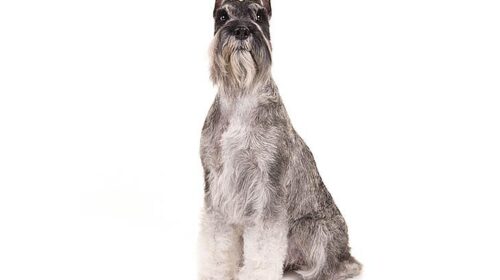
Schnauzer is a terrier breed that originated in Germany in the 15th century. It is the only terrier breed that does not have British origins. Its name, “Schnauzer,” means “muzzle” in German. These dogs are energetic and lively, and the breed is divided into three types: Standard Schnauzer, Miniature Schnauzer, and Giant Schnauzer. The Giant Schnauzer was originally used to herd cattle in southern Germany. In the early 20th century, skilled breeders recognized its exceptional working ability and highly valued temperament. The breed was first registered in breeding books in 1913 and was officially recognized as a working dog by 1925.
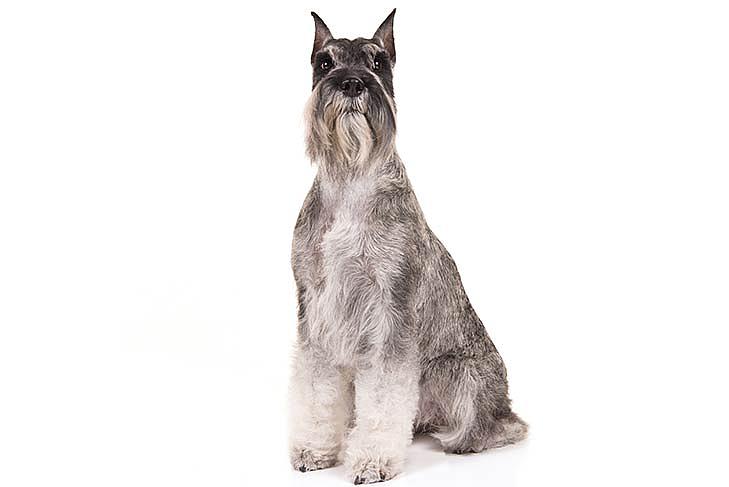
Body Structure of Schnauzer
The body is compact and approximately square in shape, meaning height and length are approximately equal. The bones are well developed. The breed standard states a height of approximately 12 to 14 inches (30–36 cm). The shoulder height is equal to the body length.
The hair of the Schnauzer
Double coat, consisting of a tough outer layer and a dense inner layer. Hair on the head, neck, ears, chest, tail, and body must be removed. During display, body hair should be long enough to clearly show its texture. Hair on the neck, ears, and head should cover the entire area. The texture is fairly dense, but not silky. Faults: Hair that is too soft or too short, or appears too greasy.
The hair is close-knit, coarse, stiff, and as dense as possible. The undercoat is soft but strong.
Schnauzer color
Recognized colors are salt-and-pepper, black-and-silver, and dark black. Regardless of the color, the skin color must be evenly distributed; that is, white or pink patches anywhere on the skin are not acceptable.
Pepper and Salt: The classic salt and pepper pattern is created by a combination of black and white hairs. Pepper and Salt: This color is created by a mixture of black and white hairs, with both colors appearing equally. Pepper and Salt: This color is created by a mixture of black and white hairs, with more black and white hairs. All variations of salt and pepper are acceptable, from lighter shades like Light Salt and Pepper to darker shades.
Head
The head is strong, rectangular, and long. It tapers slightly from the ears to the eyes and muzzle. The total length of the head is approximately half the length of the back (measured from the shoulder to the tail). The ears, set high on the head, are well-developed and of medium thickness. If cropped, they should stand erect. They are V-shaped, curved forward, and their inner edges are close to the cheeks.
eyes
The eyes are medium-sized, dark brown, and oval-shaped. However, the eyebrows should not be so long that they obstruct vision or cover the eyes.
Ear
The ears should be set high, well-developed, and of medium thickness. If cropped, they should stand erect. If uncropped, they should be medium-sized, V-shaped, and curved forward, with the inner edge close to the cheek. Faults: Erect or hanging ears are considered faults.
nose
Big, black and muscular.
tail
A high tail that carries the body upward. Traditionally, the tail was cropped in some regions, but this practice is now prohibited in many countries. The tail is generally proportionate to the body length. The tail extends slightly beyond the crown of the head.
Body
The body is short and broad, with a chest that reaches at least to the elbows. The ribs are well sprung, of sufficient depth, and contained within the small of the loin. The back is straight, sloping slightly from the shoulders to the tailbone. The shoulders are the highest point of the body. The length from the chest to the hips is equal to the height at the withers. Faults: The chest is too broad or insufficiently deep.
Neck
The neck is strong, of medium thickness and length, forming a graceful curve, and joining cleanly to the shoulders.
front legs
Viewed from all angles, the forelegs are straight and parallel to each other. They have strong ankles and adequate bone structure. The chest, of moderate depth, is set between the forelegs. The elbows are close to the body; Fault: Loose elbows.
The shoulders are sloping, well-shaped, flat, and well-defined. They are well aligned with the spine, with the outer edge of the scapula just above the elbow. The upper ends of the shoulder blades are close together. The shoulder blades tilt to one side.
Hind legs : The hindquarters have well-formed, sloping thighs. The knee joint is at the proper angle. When standing in the standard stance, the ankle extends sufficiently forward of the tail. The hindquarters should not appear wider or higher than the shoulders. The ankles are small, perpendicular to the ground in the standard stance, and parallel to each other when viewed from behind. Faults: Sickle ankles, cow-like ankles, arched feet, or curved hindquarters.
Schnauzer Breed Profile
The Giant Schnauzer is very similar in appearance to the Standard Schnauzer, but it is larger and more powerful, with a more robust build. It is energetic and well-built. Its body is almost square, agile, strong, and well-muscled. Its temperament is a mix of affection and alertness; it is intelligent and trustworthy. Calm, alert, courageous, and easily trainable, this dog is extremely loyal to its family. Playful by nature, it can appear gentle when calm and imposing when alert. Its healthy, reliable temperament, strong build, and dense, weather-resistant fur make this breed a versatile working dog with exceptional strength and stamina, suitable for one or a variety of tasks.
How much do schnauzers cost?
According to market research conducted by Pets Army editors, the price of a Schnauzer in India typically ranges from ₹25,000 to ₹80,000. The price varies depending on appearance and quality. Nowadays, most people raise Schnauzers primarily as family companion dogs. Appearance and breed requirements for such pet Schnauzers are not very high. Schnauzers with acceptable appearance and quality, and a calm temperament, are suitable for purchase in the pet market, selling for around ₹25,000. Even in kennels, Schnauzers in this category can cost between ₹25,000 and ₹80,000. It’s not advisable to purchase dogs at too low a price, as they often develop various problems after being brought home.
Intelligence of the Schnauzer
The Schnauzer is an exceptionally intelligent breed, ranking 12th in the dog intelligence rankings. They excel at training, obediently following their owner’s commands in daily life, and display loyalty and obedience.
Schnauzers are clever and intelligent. During training, they grasp the meaning of commands quickly. Although they may initially hesitate when faced with unfamiliar commands, with repeated practice from their owners, they quickly grasp the instructions, overcome any initial hesitation, and excel at completing training tasks.
When raising a young Schnauzer, owners should begin socializing it early. Start with simple, single-command training. For example, teach the puppy to walk with you; teach it to eat, sleep, and relieve itself in designated areas; train it to come when called, etc. As the puppy grows, gradually train it to fetch objects, search, sit, stand, shake hands, catch a Frisbee, etc.
Characteristics of the Schnauzer’s temperament
The lively Schnauzer has strong excitatory and inhibitory reflexes, allowing for flexible changes between them. Both excitatory and inhibitory reflexes develop rapidly during training. Improper training methods can easily lead to unwanted associations, so special attention must be paid to techniques and related approaches. The excitable Schnauzer has strong excitatory and weak inhibition. Its excitatory conditioned reflexes develop quickly and strongly, while its inhibitory conditioned reflexes develop slowly and fade quickly. Therefore, training should primarily develop and utilize its inhibitory processes. Avoid impatience or haste to avoid adverse consequences. The calm Schnauzer has both excitatory and inhibitory conditioned reflexes, but there is limited flexibility in switching between them. Its inhibitory processes are relatively stronger than its excitatory processes. This means that inhibitory conditioned reflexes develop more quickly and remain more stable during training. Therefore, training should focus on developing flexibility and increasing the stimulus appropriately.
Passive-Defensive Response Type : Schnauzers with this type respond passively and defensively when faced with frightening or threatening stimuli, which hinders training. When owners (or trainers) approach such Schnauzers: 1. Use a gentle tone and gentle movements to avoid sudden startle, as prolonged fear of approaching can disrupt bonding. Second, when encountering objects that the Schnauzer fears, patiently guide them to gradually reduce their passive state and promote adaptation. Schnauzers with a strong exploratory instinct are highly sensitive to new stimuli in their environment. This sensitivity persists even after repeated exposure, which is often associated with the breed’s inflexibility and poor adaptability. For such dogs, regular environmental acclimatization is essential to gradually develop tolerance. Before each training session, allow the Schnauzer to acclimate to the environment. Choose a quiet training area that is free from external distractions or temptations.
Schnauzer Exercise
When exploratory behavior arises during training, focus the dog’s attention on the current exercise. Proper use of positive reinforcement also helps control this tendency. Schnauzers are active animals, so they need daily exercise. Running increases physical strength and also absorbs the sun’s ultraviolet rays, which improves calcium absorption. Ultraviolet rays kill bacteria and ward off parasites.
Their exercise needs vary according to their size: Large Schnauzers require more activity than Small Schnauzers. Typically, exercise should range from 2-15 minutes of running to 20-40 minutes of brisk walking. Always keep your Schnauzer on a leash when outdoors. This can prevent potential attacks on people or animals and avoid accidents caused by sudden escapes into the street.
Precautions during the trip
If you encounter other Schnauzers on walks, keep contact with them to a minimum to prevent bites and the spread of disease. After exercise, provide them with plenty of clean water and groom their fur with a comb and wet towel. Clean up dirt and saliva left by other dogs to prevent external illnesses. If your Schnauzer has physical contact with a dog suspected of being sick based on the color or appearance of its fur, properly deworm your dog.
Precautions before bathing
Keep your head away—don’t get too close to the anal glands. First, flip the schnauzer’s tail up so the anus is visible. Second, place your fingers around the anus at the 4 o’clock and 8 o’clock positions and press. Some schnauzers secrete a yellowish-brown, foul-smelling substance, while others secrete a smaller amount—but it’s very smelly! Schnauzers that frequently eat meat especially need this! Regularly cleaning and pressing your schnauzer’s anal glands is very important—not just to eliminate body odor. If neglected, the anal glands can become inflamed.
Use the correct method : Press from the inside out, starting gently and gradually increasing the pressure. Remember to cover the anus with a tissue or cotton pad while pressing to prevent the smelly fluid from spilling on you. If the glands have been blocked for some time, the discharge will ooze out like toothpaste, not like a gush. Usually, gentle pressing will remove the discharge. If it’s difficult to remove the discharge from the anal glands, try an alternative method: place your index finger and thumb just below and slightly behind the gland, then gently press upward and outward. Normal discharge is a light yellow-brown color, can be watery or paste-like in consistency, and has a foul odor. If the discharge contains pus or blood, it’s a sign of infection—contact a veterinarian immediately.
If you can feel the buildup but can’t remove it, the anal glands are blocked and require immediate veterinary attention. Left untreated, inflammation can occur. Affected dogs will lick their anus and drag themselves on the ground. Severe cases cause pain, causing the dog to pacing, chasing its tail, or constantly licking or biting the base of its tail, eventually leading to an abscess. Affected dogs may appear lethargic, refuse to eat, or experience constipation. Regularly check the anal sacs for fluid accumulation. The frequency of cleaning depends on each dog’s stool retention pattern—some require monthly cleaning, some go two to three months without any congestion, and some may never require cleaning. Small breeds are more prone to stool retention than larger breeds, possibly due to the buildup of hard secretions from soft and over-fed food.
Advice
Whether your dog has anal glands or not, squeeze them once before each bath—it’s convenient and quick. If you notice your dog refusing to eat or is constipated, consult a veterinarian immediately.
Frequently Asked Questions (FAQs)
What is a Schnauzer?
The Schnauzer is a terrier breed that originated in Germany in the 15th century. It is the only terrier breed that does not have British origins.
What does the name Schnauzer mean?
Its name, “Schnauzer,” means “muzzle” in German.
How many types of schnauzers are there?
This breed is divided into three types: Standard Schnauzer, Miniature Schnauzer and Giant Schnauzer.
What were Giant Schnauzers used for?
The Giant Schnauzer was originally used to herd cattle in southern Germany.
What is the height of a schnauzer?
The breed standard states their height to be approximately 12 to 14 inches (30–36 cm).
What is the hair of a schnauzer like?
Double coat, consisting of a tough outer layer and a dense undercoat. The hairs are close together, coarse, stiff, and as dense as possible. The undercoat is soft but strong.
What are the colors of Schnauzers?
Recognized colors are salt-and-pepper, black-and-silver, and dark black.
How much do schnauzers cost?
The price of a Schnauzer in India typically ranges from ₹25,000 to ₹80,000. The price varies depending on the appearance and quality.
Is a Schnauzer an intelligent dog?
The Schnauzer is an exceptionally intelligent breed, ranking 12th in the intelligence rankings of dogs.
Do Schnauzers need daily exercise?
Schnauzers are active animals, so they need daily exercise.